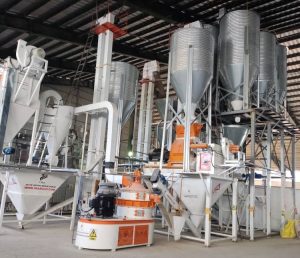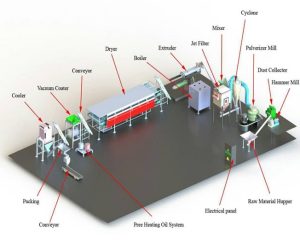

Design, Manufacturing, Installation, and Commissioning of Soy Protein Production Lines for Human Consumption Using State-of-the-Art Technology
Design, Manufacturing, Installation, and Commissioning of Soy Protein Production Lines for Human Consumption Using State-of-the-Art Technology

Soy protein is one of the primary sources of plant-based protein in the food industry and is widely used in a variety of products, including plant-based burgers, nutritional supplements, sausages, and ready-to-eat foods. The design and implementation of production lines for this product require specialized technical expertise, dedicated equipment, and strict compliance with food hygiene and food safety standards.

Soy Protein Production Line for Human Consumption

Stages of Implementing a Soy Protein Production Line for Human Consumption

1. Preliminary Studies and Engineering Design

  • Evaluation of the characteristics of the intended final product, including soy protein isolate, soy protein concentrate, or textured soy protein.
  • Design of the production process, including soybean preparation, protein extraction, filtration, drying, and packaging.
  • Selection of appropriate technologies, including thermal extrusion, mechanical separation, and membrane-based processing.
  • Preparation of Process Flow Diagrams (PFDs), Piping and Instrumentation Diagrams (P&IDs), and equipment layout drawings for the production facility.

2. Equipment Manufacturing and Procurement

  • Design and manufacturing of key machinery and equipment using stainless steel materials in compliance with food-grade requirements and applicable CE requirements.
  • Equipment such as:
    • Soybean dehulling and grinding machines
    • Protein extraction and fiber separation systems
    • Extrusion unit with temperature and pressure control
    • Hot-air or vacuum drying systems
    • Precision weighing and packaging systems
  • Quality control during the manufacturing stages and operational testing prior to shipment to the project site.

3. Installation and Commissioning of the Soy Protein Production Line for Human Consumption

  • Mechanical installation of the equipment at the production facility in accordance with the approved technical drawings.
  • Installation of electrical control panels and sensors, followed by commissioning of the automation and PLC control system.
  • Conducting trial commissioning tests using actual raw materials and adjusting process parameters such as temperature, pressure, and moisture content.
  • Handover of the complete system ready for operation, together with technical documentation and operating instructions.

4. Training and Technical Support

  • Training of operators and technical personnel on system operation, product quality control, and equipment maintenance.
  • Providing periodic inspection and maintenance programs, as well as technical support, to maintain stable performance and reduce maintenance and repair costs.

Technical and Standardization Considerations

  • Compliance with Hygienic Requirements: Compliance with food-processing hygiene requirements, including ease of cleaning, smooth and cleanable surfaces, and prevention and control of cross-contamination.
  • Use of Advanced Extrusion Technology: Application of advanced extrusion technology to achieve the desired texture and nutritional stability of soy protein products.
  • Compliance with CE Requirements: Compliance with applicable CE requirements in the design and installation of equipment to promote consumer safety and workplace safety.
  • Energy and Raw Material Optimization: Optimization of energy consumption and raw material utilization to ensure high process efficiency and minimize production waste.

Proper implementation of these stages results in a modern and cost-effective production line for manufacturing soy protein for human consumption. The human-consumption soy protein production lines manufactured by Atieh Sazan Negin Faraz Knowledge-Based Company are capable of producing products with high nutritional value, broad applicability in the food industry, and the potential to compete in both domestic and international markets.

For a free consultation and further information, please contact us.


Design, Manufacturing, Installation, and Commissioning of Soy Protein Production Lines for Human Consumption Using State-of-the-Art Technology
Soy Protein Production Lines for Human Consumption Using State-of-the-Art Technology

Animal Feed, Poultry Feed, and Aquatic Feed Production Lines

Atiye Sazan Negin Faraz Knowledge-Based Company: A Pioneer in Providing Innovative Industrial Solutions Based on Quality and Advanced Technology for the Design, Manufacturing, Installation, and Commissioning of Animal Feed, Poultry Feed, and Aquatic Feed Production Lines

In today’s competitive environment, choosing a capable and committed business partner plays a key role

Design, Manufacturing, Installation, and Commissioning of Animal Feed, Poultry Feed, and Aquatic Feed Production Lines

 in the success of businesses. Atiye Sazan Negin Faraz Knowledge-Based Company, with an outstanding track record in the machinery manufacturing industry and animal feed, poultry feed, and aquatic feed production industries, has consistently been recognized as one of the leading providers of innovative, high-quality solutions. We believe that innovation, quality, and customer orientation are the fundamental pillars for achieving sustainable growth and maximum customer satisfaction.

One of the key specialized areas of activity of Atiye Sazan Negin Faraz Knowledge-Based Company is providing comprehensive services in the design, manufacturing, installation, and implementation of animal feed, poultry feed, and aquatic feed production lines. With a deep understanding of the importance of this industry within the country’s food supply chain, as well as the need to produce high-quality and cost-effective products, we provide solutions that significantly improve the productivity of your production facilities.

Drawing on its technical expertise and specialized workforce, Atiye Sazan Negin Faraz Knowledge-Based Company is capable of designing, manufacturing, installing, and commissioning equipment and machinery for animal feed, poultry feed, and aquatic feed production lines based on extrusion technology, with customized production capacities specified by the customer, including non-standard capacities—both higher and lower than conventional standard capacities—for establishing various types of factories with specific production objectives.

Furthermore, to upgrade extrusion lines for the production of shrimp feed and caviar-fish feed, the company has successfully designed, manufactured, installed, and implemented the ECS (Expander Control System), a system for controlling feed buoyancy.

The aquatic feed production lines manufactured by this company are capable of simultaneously producing specialized aquatic feeds with different buoyancy characteristics. The line can simultaneously produce fully floating feed, slow-sinking feed, and fully sinking feed. In other words, it can simultaneously produce trout feed, caviar-fish feed, and shrimp feed. The line is capable of producing various types of aquatic feed with different buoyancy characteristics—100% floating, slow-sinking, and fully sinking—in different production capacities. The production capacity for starter feeds and very fine feed particles on this production line has been increased by 300%, for which a new system has been designed.

The equipment comprising the extrusion-based aquatic feed production line includes more than 50 different systems, which, after being properly positioned and installed, are controlled fully automatically from the control room.

Aquatic Feed Production Line Flowchart

Key Stages in the Implementation of Animal Feed, Poultry Feed, and Aquatic Feed Production Lines

Design and Engineering

  • Requirements Analysis: Precise assessment of the required production capacity, types of feed (animal, poultry, and aquatic feed), raw material specifications, and final product characteristics.
  • Technical Design: Preparation of equipment layout drawings, Process Flow Diagrams (PFDs), Piping and Instrumentation Diagrams (P&IDs), and engineering calculations and designs for machinery.
  • Technology Selection: Evaluation and selection of up-to-date technologies and suitable equipment based on applicable industrial standards and the required performance.

Equipment Manufacturing and Procurement

  • Manufacturing Process: Fabrication of components and assembly of machinery based on approved technical drawings. This stage includes the manufacturing of equipment such as:
  • Raw material receiving and conveying systems, such as bucket elevators, chain conveyors, screw conveyors, Z-type elevators, modular belt conveyors, and others.
  • Primary processing equipment, such as [hammer mills].
  • Mixing systems, such as mixers.
  • Pelletizing or forming equipment, including pellet mills and extruders.
  • Drying and cooling systems, including [dryers] and coolers.
  • Packaging and weighing systems.

Material Selection: Use of high-quality and durable materials, such as various grades of carbon steel and stainless steel, in accordance with applicable hygienic and industrial standards.

Quality Control: Implementation of technical inspections and performance testing throughout the manufacturing process.

Installation and Commissioning

  • Mechanical Installation: Installation of equipment at the designated locations according to the layout drawings and connection of the relevant components.
  • Electrical and Control Installation: Electrical wiring, connection of electrical control panels, programming of control systems (PLC), and functional testing of the automation system.
  • Trial Commissioning: Conducting performance tests using raw materials and precisely adjusting operating parameters to achieve the designed production capacity and product quality.

Training and Support

  • Personnel Training: Providing operators and technical personnel with the necessary training on equipment operation, routine maintenance, and safety principles.
  • Technical Support: Providing technical documentation, maintenance instructions, and technical support services throughout the operating period.

Key Considerations

  • Standards: Compliance with national and international standards in design and manufacturing, particularly with regard to safety, hygiene, and environmental requirements.

The animal feed, poultry feed, and aquatic feed production lines designed and implemented by this company have been developed in accordance with the requirements of the European [CE standard]. Compliance with this standard means that, during the design, manufacturing, and installation of the equipment, the safety, health, and performance requirements defined in the relevant European Union regulations have been taken into consideration.

  • Energy Efficiency: Selection of equipment with optimized energy consumption to reduce operating costs.
  • Reliability: Use of high-quality components and robust engineering designs to minimize failures and production-line downtime.
  • Flexibility: Designing the production line in such a way that the production of different types of feed and, to a certain extent, future changes in production capacity are possible.

This company is proud to be ready to cooperate with valued manufacturers in the animal feed, poultry, and aquatic feed industries and to facilitate the achievement of sustainable success by providing innovative, high-quality solutions.

For a free consultation and further information about our capabilities and services, please contact us.

Design, Manufacturing, Installation, and Commissioning of Animal Feed, Poultry Feed, and Aquatic Feed Production Lines

Reverse Engineering That Goes Beyond the Original

Expert Reverse Engineering Solutions | Atiyeh Sazan Negin Faraz

Reverse Engineering

What is reverse Engineering?

When you have a machine or production line that works and you need another one just like it, reverse engineering is the answer.

At Atiyeh Sazan Negin Faraz, we go beyond simply copying what already exists. We study the original, rebuild it with precision, and look for every opportunity to make it better.

How It Works

We begin with a careful, hands-on examination of your original sample. From there, our engineers produce everything needed to reconstruct it from scratch:

  • Complete manufacturing and assembly drawings
  • Full installation documentation
  • Detailed parts lists and machinery specifications
  • In-depth analysis of system performance and component interaction

More Than Replication

Our engineering team doesn’t stop at duplication. We use each project as an opportunity to evaluate the original design and identify areas for improvement. Depending on your needs, this can include:

  • Higher efficiency : getting more output from the same input
  • Lower energy consumption : reducing operating costs over time
  • Improved safety : meeting modern standards and reducing risk
  • Less component wear : extending the working life of critical parts
  • Easier maintenance : simplifying upkeep and reducing downtime

Built Better Than the Original

If you want to upgrade while you replicate, our team can implement engineering modifications directly into the build process. The result is a machine that matches your original in appearance and function , but performs at a higher level in quality, reliability, and long-term productivity.

Our Reverse Engineering Services

At Atiyeh Sazan Negin Faraz, we offer a full range of reverse engineering services — from initial inspection through to final replication and optimization.

  • Sample Inspection and Analysis : A thorough examination of the original machine or system to capture every functional and structural detail
  • Manufacturing and Assembly Drawings : Precise, ready-to-use technical drawings developed to exact specifications
  • Technical Specifications and Parts Lists : Complete documentation of components, materials, and machinery requirements
  • High-Accuracy Replication : Faithful reconstruction of machines or production lines, built to perform like the original
  • Engineering Optimization Proposals : Expert recommendations for improving performance, efficiency, and reliability beyond the original design

Types of Reverse Engineering We Cover

Hardware Reverse Engineering

Analysis of physical components, circuits, and materials : ideal for mechanical and electronic systems that need to be accurately reproduced or improved.

Software Reverse Engineering

Examination of source codes, communication protocols, and algorithms : used to understand, document, or rebuild software-driven systems.

Process Reverse Engineering

Study of production procedures and supply chain operations:  helping clients replicate or refine entire manufacturing workflows.

Here’s the website-ready version:

Key Stages in the Reverse Engineering Process

Every successful reverse engineering project follows a structured path — from the first look at the original sample to a fully validated final product.

  1. Identification & Data Collection
    We start by gathering all available product specifications, technical information, and existing documentation to build a complete picture of what we’re working with.
  2. Analysis & Decomposition
    Components are carefully disassembled and examined, giving our engineers a clear understanding of how each part functions and contributes to the overall system.
  3. Modeling & Documentation
    Using the insights gained, we prepare detailed engineering drawings, technical diagrams, and precise 3D models that form the foundation for reconstruction.
  4. Reconstruction & Implementation
    With documentation in hand, we move to building prototypes and developing the required systems or software — bringing the design back to life.
  5. Validation & Testing
    The reconstructed product is rigorously compared against the original sample. Any gaps or discrepancies are identified and resolved before final delivery.

Why Production Process Optimization Matters

Replicating a machine is one thing, making it perform better is another. Optimizing the production process delivers real, measurable benefits:

  • Greater productivity and operational efficiency
  • Lower costs across raw materials, energy, and labor
  • Higher quality in the final product
  • Shorter production lead times
  • A safer, more satisfying workplace for employees

How Reverse Engineering Drives Process Improvement

Reverse engineering isn’t just about copying what exists , it’s one of the most powerful tools available for understanding and improving how things are made.

Uncovering weaknesses in current systems
By analyzing a well-functioning product, our engineers can identify hidden problems in an existing production line before they become costly issues.

Clarifying technical requirements
Breaking down a product’s components and behavior reveals exactly what machinery, materials, and manufacturing tolerances are needed, removing guesswork from the process.

Improving Design for Manufacturability (DFM)
Understanding how an efficient product is built allows engineers to refine designs so they’re easier and less expensive to manufacture at scale.

Discovering better technologies and techniques
The analysis process often surfaces innovative production methods that can be adopted into existing manufacturing lines, keeping operations current and competitive.

Reducing material and energy waste
A detailed product study frequently points to practical strategies for cutting waste and lowering energy consumption without sacrificing performance.

Raising quality standards
Studying a reverse-engineered product gives teams the insight needed to define more accurate, effective quality control criteria , elevating the entire production standard.

A Strategic Tool for Innovation

Reverse engineering is more than a technical service — it’s a driver of continuous improvement in modern manufacturing. By combining deep reverse engineering expertise with sound production management principles, Atiyeh Sazan Negin Faraz is equipped to design and manufacture high-quality products with exceptional precision, fully aligned with what each client needs and expects.

Ready to take the next step?
Contact our technical experts today for a free consultation.
Get in Touch

What is reverse engineering?

Ammonium Sulfate Production Line (Fertilizer Grade)

Ammonium Sulfate Production Line (Fertilizer Grade)

Ammonium sulfate ((NH₄)₂SO₄) is an inorganic salt with numerous commercial applications. Its most common use is as a soil-conditioning fertilizer, as it contains approximately 21% nitrogen (w/w) and 24% sulfur (w/w), making it an effective source of essential plant nutrients.

Production of Granular and Crystalline Ammonium Sulfate Using Advanced Industrial Technologies

Ammonium sulfate is one of the most important nitrogen-sulfur fertilizers used worldwide. It is extensively applied in agriculture, chemical industries, and even water treatment processes. In addition to supplying nitrogen required for plant growth, it increases sulfur content in the soil and improves nutrient uptake efficiency.

Depending on the intended application and market requirements, ammonium sulfate can be produced in either granular or crystalline form, each offering distinct characteristics and advantages.

Granular Ammonium Sulfate Production Technology (Pipe Reactor–Granulator Process)

The production of granular ammonium sulfate utilizes the advanced Pipe Reactor–Granulator process. This technology is recognized as one of the most precise and efficient production methods available, enabling controlled reaction between liquid ammonia (NH₃) and sulfuric acid (H₂SO₄) with minimal energy consumption and raw material losses.

In this system, the raw materials are stored in dedicated storage tanks and delivered through an integrated network of industrial pipelines, pumps, and control valves into a pipe reactor at carefully controlled ratios. The reactor length typically ranges from 10 to 15 meters, where a significant portion of the reaction between sulfuric acid and ammonia takes place to form ammonium sulfate.

The reaction is highly exothermic, generating sufficient heat to sustain the process without extensive external energy input.

The slurry produced in the pipe reactor is then transferred to the Reaction Granulator. At this stage, controlled quantities of water and additional ammonia are introduced to complete the chemical reaction and stabilize the physical properties of the product. Precise control of temperature, pressure, and reactant ratios is essential for achieving the desired granule size, hardness, and durability.

Granule Cooling and Classification

After granulation, the product is discharged into a Rotary Cooler, where its temperature is gradually reduced and the physical structure of the granules is stabilized. Controlled airflow within the cooling system prevents granules from sticking together or breaking during handling.

Following cooling, the material is conveyed by bucket elevators or belt conveyors to the screening section.

During screening, particles are classified according to size. Oversized granules are directed to a hammer mill or grinding unit for size reduction and recycling. Product-sized granules, typically ranging from 3 to 6 mm, are sent to the packaging section as finished product. Fine particles are recycled back to the granulator to maintain a stable reaction bed and ensure continuous process efficiency.

Emission Control and Material Recovery

One of the major advantages of the Pipe Reactor–Granulator technology is the incorporation of Venturi Scrubber systems. These units collect and treat process exhaust gases and airborne particulate matter generated throughout production.

Dust emitted from equipment such as the rotary cooler is captured through industrial extraction systems and returned to the production cycle. This approach not only minimizes environmental emissions but also significantly reduces material losses, making the process highly sustainable and environmentally friendly.

Crystalline Ammonium Sulfate Production Using the Oslo Crystallizer

In addition to granular production, crystalline ammonium sulfate can be manufactured by incorporating a solution preparation unit and an Oslo Crystallizer into the production line.

The Oslo Crystallizer operates on the principle of controlled, low-turbulence crystallization, providing optimal conditions for the formation of uniform, high-purity crystals.

In this process, a saturated ammonium sulfate solution continuously circulates within the crystallizer through a specially designed internal flow system. By carefully controlling temperature, concentration, and residence time, ideal crystallization conditions are achieved.

The result is the production of transparent, uniform crystals with excellent water solubility, making them suitable for both agricultural and industrial applications.

Advantages of Pipe Reactor–Granulator and Oslo Crystallizer Technologies

  • High raw material utilization efficiency
  • Consistent product quality with adjustable granule or crystal size
  • Extremely low atmospheric emissions through advanced gas and dust collection systems
  • Efficient recovery and recycling of suspended solids
  • Capability to produce both granular and crystalline ammonium sulfate within a single production facility
  • Lower energy consumption compared to conventional production methods
  • Environmentally sustainable operation with minimal waste generation

The combination of Pipe Reactor–Granulator and Oslo Crystallizer technologies provides a scientifically proven, cost-effective, and environmentally responsible solution for producing high-quality ammonium sulfate fertilizer.

Manufacturers utilizing these advanced technologies can significantly improve production efficiency while delivering products that meet international quality standards, making them suitable for both domestic markets and export applications.

For more information please contact us.

Ammonium Sulfate Production Line

Manufacturing, Installation, and Commissioning of Livestock, Poultry, and Aqua Feed Production Lines

Atiye Sazan Negin Faraz knowledge-based Company: A Pioneer in Innovative Industrial Solutions, Leveraging Quality and Modern Technology in the Manufacturing, Installation, and Commissioning of Livestock, Poultry, and Aquaculture Feed Production Lines

In today’s competitive landscape, selecting a capable and committed business partner plays a crucial role in the success of enterprises. Atiye Sazan Negin Faraz knowledge-based Company, with its distinguished history in the machinery and feed production industries for livestock, poultry, and aquaculture, has consistently been recognized as a leader in providing innovative and high-quality solutions. We believe that innovation, quality, and customer-centricity are the cornerstones of achieving sustainable growth and maximum customer satisfaction.

One of this Company’s specialized and key areas of activity is providing comprehensive services in the design, manufacturing, installation, and implementation of feed production lines for livestock, poultry, and aquaculture. With a deep understanding of the importance of this industry in the nation’s food supply chain and the need for producing high-quality, cost-effective products, we offer solutions that significantly enhance the productivity of your manufacturing facilities.

Relying on its technical knowledge and specialized workforce, Atiye Sazan Negin Faraz knowledge-based Company possesses the capability to design, manufacture, install, and commission equipment and machinery for livestock, poultry, and aqua feed production lines using the extruder method, tailored to specific customer capacities (even non-standard capacities – higher and lower than usual) for setting up various factories with specific production goals. Furthermore, to enhance the extruder line for producing feed for shrimp and sturgeon, the company has successfully designed, manufactured, installed, and implemented the ECS (Expander Control System) for controlling feed buoyancy.

The aquaculture feed production lines manufactured by our company are capable of simultaneously producing specialized aquaculture feeds under various conditions. This line can simultaneously produce fully floating feed, slow-sinking feed, and fully sinking feed. This means it can produce feed for trout, sturgeon, and shrimp concurrently. This line is capable of producing any type of aquaculture feed with different buoyancy characteristics (100% floating, slow-sinking, and fully sinking) at various capacities. The production capacity for starter and very fine feeds in this production line has increased by 300%, for which a new system has been designed.

The extruder-based aquaculture feed production line equipment comprises over 50 different systems, which are fully automatically controlled from the control room after their layout and integration.

Flowchart of the Aquaculture Feed Production Line

Livestock, Poultry, and Aquaculture Feed Production Lines

Schematic Diagram of the Livestock, Poultry, and Aquaculture Feed Production Lines

Key Stages in the Implementation of Feed Production Lines for Livestock, Poultry, and Aquaculture:

  1. Design and Engineering:

*   Needs Analysis: Precise evaluation of the required production capacity, types of feed (livestock, poultry, aquaculture), raw material specifications, and final product.

*   Technical Design: Preparation of equipment layout plans, Process Flow Diagrams (PFD), Piping and Instrumentation Diagrams (P&ID), and computational design of machinery.

*   Technology Selection: Review and selection of modern technologies and appropriate equipment based on industrial standards and expected performance.

  1. Manufacturing and Equipment Procurement:

*   Manufacturing Process: Production of components and assembly of machinery according to approved technical drawings. This stage includes the manufacturing of equipment such as:

    *   Raw material receiving and conveying systems (e.g., elevators, chain conveyors, screw conveyors, Z-type elevators, modular belt conveyors, etc.).

*   Primary processing equipment (e.g., hammer mills).

    *   Mixing systems (e.g., mixers).

    *   Pelleting or forming equipment (pellet press, extruder).

    *   Drying and cooling systems (dryer and cooler).

    *   Packaging and weighing systems.

*   Material Selection: Utilization of high-quality and durable raw materials (such as various carbon steels, stainless steels) in compliance with sanitary and industrial standards.

*   Quality Control: Implementation of technical inspections and performance tests throughout the manufacturing process.

  1. Installation and Commissioning:

*   Mechanical Installation: Placement of equipment at the designated site according to the layout plan and connection of components.

*   Electrical and Control Installation: Wiring, connection of electrical panels, programming of control systems (PLC), and testing of automation functionality.

*   Trial Run: Execution of performance tests with raw materials and precise adjustment of operational parameters to achieve the designed capacity and quality.

  1. Training and Support:

*   Personnel Training: Provision of necessary training to operators and technical staff on equipment operation, daily maintenance, and safety principles.

*   Technical Support: Provision of technical documentation, maintenance guidelines, and support services throughout the operational period.

For more information please contact us:

+989120275171

Livestock, Poultry, and Aqua Feed Production Lines
Manufacturing, Installation, and Commissioning of Livestock, Poultry, and Aqua Feed Production Lines