
Nutritional Requirements and Functional Feeding Strategies for Rainbow Trout
Rainbow trout (Oncorhynchus mykiss) is one of the most widely cultivated freshwater species in global aquaculture, primarily due to its rapid growth rate, high market demand, and adaptability to different farming systems. As the aquaculture industry continues to expand, optimizing feed quality has become a critical factor for ensuring sustainable production, maximizing biological efficiency, and reducing environmental impacts. Modern feed development for rainbow trout is based on a precise understanding of nutritional requirements across various life stages, from larvae and juveniles to broodstock. High-quality extruded feeds, such as extruded trout feed, are designed to deliver balanced nutrition, enhanced digestibility, and high growth performance under diverse farming conditions.
Nutritional Foundations of Rainbow Trout Feeding
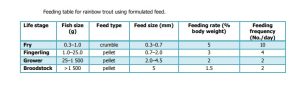
The nutritional needs of rainbow trout evolve significantly throughout their development. Early larval and fry stages require highly digestible proteins, essential fatty acids, and specific micronutrients to support organ development, immune maturation, and skeletal formation. As fish transition into grow-out phases, energy requirements increase, and diets must provide optimal ratios of protein, lipids, and carbohydrates to support muscle accretion and metabolic efficiency.
Protein is the most essential macronutrient for trout, influencing growth rate, feed conversion, and overall physiology. High-quality trout feeds rely on an ideal protein concept, ensuring that amino acids are provided in proportions closely matching the species’ metabolic needs. This approach reduces nitrogenous waste emissions, improves growth performance, and minimizes feed costs by preventing unnecessary overuse of expensive protein sources.
Lipids serve as a dense energy source and supply essential fatty acids crucial for hormone production, cell membrane integrity, and immune function. Balancing lipid levels is also vital for maintaining flesh quality and preventing metabolic disorders. Carbohydrates, although utilized less efficiently than proteins or fats, can still contribute to meeting energy needs and improving pellet stability when included at controlled levels.
Physical Characteristics and Approximate Analysis of L.lion Rainbow Trout Feed
| Chemical composition % | Pre-Starter | Starter | Pre-Grow | Grow-Out | Broodstock | ||||||||
| SFT00 | SFT0 | SFT1 | SFT2 | FFT1 | FFT2 | GFT1 | GFT2 | GFT3 | GFT4 | GFT5 | BFT1 | BFT2 | |
| Crude Energy (MJ/kg) | 19.58 | 19.58 | 19.82 | 19.65 | 19.93 | 19.94 | 19.85 | 20.15 | 20.25 | 20.53 | 20.92 | 19.92 | 19.79 |
| Crude Protein (%) | 54 | 54 | 52 | 50 | 48 | 46 | 42 | 40 | 38 | 38 | 37 | 43 | 45 |
| Crude Fat (%) | 10 | 10 | 12 | 12 | 14 | 14 | 16 | 16 | 16 | 16 | 16 | 17 | 15 |
| Crude Fiber (%) | 1 | 1 | 1 | 1.5 | 1.5 | 1.5 | 2.5 | 2.5 | 3.5 | 4.5 | 4.5 | 3.5 | 2.5 |
| Ash (%) | 10 | 10 | 10 | 10 | 10 | 10 | 10 | 10 | 10 | 10 | 10 | 10 | 10 |
| Moisture (%) | 10 | 10 | 10 | 10 | 10 | 10 | 10 | 10 | 10 | 10 | 10 | 10 | 10 |
| Available Phosphorus (%) | 1 | 1 | 1 | 1 | 1 | 1 | 1 | 1 | 1 | 1 | 1 | 1 | 1 |
| Pellet Size (mm) | 0.4 | 0.8 | 1.5 | 2 | 2.5 | 3 | 5 | 6 | 8 | 10 | 10 | 10 | 10 |
| Fish Weight (g) | 0.1-0.5 | 0.5-1 | 1-4 | 4-10 | 10-25 | 25-75 | 75-150 | 150-300 | 300-400 | 400-1000 | ≥1000 | ≥1500 | ≥1500 |
| Daily Feeding Rate (% of Body Weight) | 15 | 15 | 10 | 10 | 8 | 6 | 4 | 4 | 3 | 3 | 3 | 2 | 1 |
| Pellet Behavior | Sinking | Sinking | Floating/
Sinking |
Floating/
Sinking |
Floating | Floating | Floating | Floating | Floating | Floating | Floating | Floating | Floating |
Feeding Rate (%) of Rainbow Trout Based on Body Weight at Different Temperatures (°C)
| Fish Weight (g)
Water temperature |
0.1-0.5 | 0.5-1 | 1-4 | 4-10 | 10-25 | 25-75 | 75-150 | 150-300 | 300-400 | 400-1000 | ≥1000 | ≥1500 | ≥1500 |
| 6-8 | 2.39 | 1.82 | 1.7 | 1.45 | 1.23 | 1.05 | 1 | 0.85 | 0.75 | 0.60 | 0.83 | 0.42 | 0.37 |
| 8-10 | 2.87 | 2.19 | 2.04 | 1.74 | 1.23 | 1.25 | 1.18 | 0.98 | 0.95 | 0.9 | 0.96 | 0.49 | 0.43 |
| 10-12 | 3.59 | 2.73 | 2.54 | 2.17 | 1.85 | 1.57 | 1.3 | 1.2 | 1.15 | 1 | 1.8 | 0.62 | 0.55 |
| 12-14 | 4.3 | 3.28 | 3.06 | 2.6 | 2.21 | 1.88 | 1.5 | 1.35 | 1.3 | 1.2 | 1.22 | 0.77 | 0.68 |
| 14-16 | 4.59 | 3.5 | 3.27 | 2.78 | 2.36 | 2.01 | 1.65 | 1.45 | 1.4 | 1.3 | 1.42 | 0.82 | 0.72 |
| 16-18 | 4.78 | 3.64 | 3.4 | 2.89 | 2.46 | 2.09 | 1.70 | 1.5 | 1.45 | 1.35 | 1.35 | 0.85 | 0.75 |
| 18-20 | 4.59 | 3.62 | 3.2 | 2.72 | 2.31 | 1.97 | 1.75 | 1.52 | 1.48 | 1.4 | 1.12 | 0.81 | 0.71 |
| ≥20 | Appetite-based Feeding | ||||||||||||
The Advantages of Extruded Feed Technology
Extruded feeds have become the industry standard for trout production due to their superior digestibility, floating/sinking behavior, and nutrient retention. Extrusion applies specific temperature and pressure conditions that gelatinize starches, denature anti-nutritional factors, and increase nutrient availability. At the same time, extruded pellets allow for precise control over oil absorption, ensuring consistent energy levels and optimal growth responses.
The extruded feed is engineered to deliver stable water durability, high nutrient density, and uniform pellet quality. These attributes contribute to reduced feed wastage, lower water pollution, and improved feed conversion ratios (FCR). By maintaining consistent pellet buoyancy, extruded feeds also provide more accurate feeding management, helping farmers monitor consumption patterns and adjust feeding strategies according to fish behavior and environmental conditions.
Functional Feeds: Enhancing Health, Immunity, and Reproductive Performance
In addition to meeting standard nutritional needs, modern trout production increasingly relies on functional feeds—specialized formulations enriched with targeted micronutrients, bioactive compounds, and natural additives that promote resilience and long-term health. These feeds are particularly beneficial for broodstock populations, fish recovering from disease outbreaks, and farming systems exposed to stressful environmental conditions.
Functional feeds often contain immune-stimulating ingredients such as beta-glucans, nucleotides, specific vitamins, and trace minerals that enhance innate and adaptive immunity. Strengthening the immune system not only reduces mortality rates but also minimizes the need for antibiotic treatments, aligning with global trends toward environmentally responsible aquaculture.
A key component of advanced functional trout feeds is the incorporation of bioactive peptides. These short protein fragments offer multiple physiological advantages, including improved intestinal morphology, enhanced nutrient absorption, greater antioxidant capacity, and strengthened immune responses. By supporting the structure and function of the digestive tract, bioactive peptides directly contribute to better feed efficiency and higher growth rates.
Formulation Based on Seasonal and Environmental Factors
Successful trout feeding programs must account for variations in water temperature, oxygen levels, photoperiod, and seasonal changes. Rainbow trout exhibit different metabolic rates depending on temperature; therefore, feed formulations must be adjusted to support optimal nutrient digestion and assimilation at each temperature range.
During colder seasons, when metabolic activity decreases, trout require energy-dense feeds with optimized protein-to-energy ratios to maintain body condition without excessive feed input. In warmer periods, feeds should emphasize digestible protein sources and balanced lipid levels to support rapid growth while preventing metabolic stress. The trout feed is specifically developed to accommodate these physiological shifts, ensuring consistent performance year-round.
Compatibility with Modern Aquaculture Systems
One of the critical strengths of high-quality extruded trout feed is its adaptability to various farming systems. Rainbow trout are cultivated in a range of settings, including recirculating aquaculture systems (RAS), flow-through raceways, concrete ponds, earthen ponds, and open-water cage culture. Each farming environment creates unique nutritional and operational challenges.
In RAS environments, where water quality must be meticulously controlled, feeds with high digestibility and low waste output are essential to prevent ammonia accumulation and maintain optimal biofilter efficiency. In cage systems, feed stability and water resistance are crucial to minimizing nutrient leaching and reducing environmental impact. The extruded feed is formulated to maintain its structural integrity in water while ensuring rapid nutrient release inside the digestive tract.
Environmental Sustainability and Feed Efficiency
Sustainability is a central pillar of modern trout feed development. Improved feed conversion ratios (FCR) not only reduce production costs but also play a vital role in minimizing organic waste, nitrogen emissions, and overall ecological footprint. High-quality extruded feeds are engineered to provide precise nutrient delivery with minimal environmental losses.
By leveraging advanced nutritional concepts and efficient feed technologies, producers can achieve excellent specific growth rates (SGR) while promoting environmentally responsible aquaculture practices. This contributes to healthier ecosystems, improved farm profitability, and a more sustainable aquaculture industry.
Conclusion
Optimizing the nutrition of rainbow trout requires a deep understanding of the species’ physiological needs, environmental interactions, and production challenges. Modern extruded feeds, such as the trout feed, combine scientific formulation principles with advanced functional components to support efficient growth, robust immunity, superior reproductive performance, and sustainable farming practices. By integrating bioactive peptides, balanced macronutrient ratios, and seasonally adjusted formulations, these feeds align with global aquaculture demands for high-quality, environmentally responsible fish production.