




Refinery Storage Tanks: Advanced Technology, Design, and Equipment
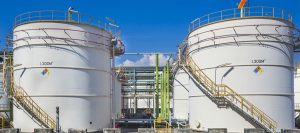
Refinery storage tanks are among the most important and widely used equipment in the oil and gas industry, playing a vital role in the storage and transportation of chemical and petroleum products. These tanks are designed and manufactured in accordance with international standards for the safe storage and transfer of liquids and hazardous materials, ensuring safety and operational efficiency in refinery operations.

Design and Manufacturing of Refinery Storage Tanks
The design of refinery storage tanks must be carried out in strict compliance with applicable international standards, including API 650 and ASME standards. Key features of the manufacturing process include the use of professional machinery, advanced welding systems, and rolling and forming processes to ensure the structural integrity, strength, and safety of the tanks. Specialized equipment used in the manufacturing of these tanks includes:
- Laser and plasma cutting systems for high-precision cutting of steel plates
- Hydraulic forming machines for forming the walls of spherical and cylindrical tanks
- TIG, MIG, and plasma welding machines for producing strong and leak-tight joints
- Non-destructive testing (NDT) equipment and methods, including radiographic testing and ultrasonic testing, for evaluating weld quality and the integrity of the tank structure
Testing and Quality Control Equipment
Following the manufacturing process, refinery storage tanks must undergo pressure and hydrostatic testing, as well as leak detection tests. The use of advanced pressure-testing equipment helps verify resistance to internal and external pressure and detect potential leaks, thereby ensuring the overall safety, integrity, and operational performance of the tank.
Installation and Commissioning Equipment
After manufacturing is completed, refinery storage tanks are installed and commissioned at their designated locations using mechanical and electrical equipment such as overhead cranes, leveling systems, and piping connections. This stage requires a high level of precision to ensure proper positioning and alignment, prevent leakage, and achieve safe and reliable long-term tank operation.
Applications and Importance of Refinery Storage Tanks
Refinery storage tanks are generally designed in the following types:
- Atmospheric storage tanks: Used for storing materials at or near atmospheric pressure without the need for pressure-vessel systems.
- Spherical storage tanks: Suitable for storing materials under high pressure, as their geometry provides a relatively uniform distribution of stresses throughout the structure.
- Pressure vessels: Designed for storing materials at elevated pressures and commonly used in the oil, gas, and petrochemical industries.
Refinery storage tanks must be designed and manufactured in accordance with safety, environmental, and operational requirements and may be provided in open or enclosed configurations, depending on the application. Hazardous chemicals, flammable fluids, and toxic gases are generally stored in enclosed and properly secured tanks to minimize the risk of leakage and prevent hazardous incidents.
The use of modern technologies and advanced equipment in the manufacturing and installation of refinery storage tanks plays an important role in improving safety, operational efficiency, and environmental protection. Compliance with international standards, the use of modern manufacturing and inspection equipment, and rigorous quality control are fundamental principles in the production of these tanks, helping ensure reliable refinery operations and reduce the risk of accidents.
For consultation and further information, please contact us.