



Cement Plant Design, Installation, and Construction
The cement industry is one of the main pillars of infrastructure development and construction worldwide. Cement is a powdered material that, when mixed with water, transforms into a strong binding material used in the construction of various structures, from foundations to concrete components.
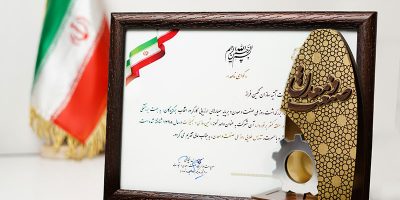
Atiye Sazan Negin Faraz Knowledge-Based Company, with specialized experience in the design, installation, and construction of cement production lines, undertakes all stages of plant development, from equipment supply to the complete commissioning of the production facility. The company’s objective is to achieve maximum productivity, high product quality, and reduced energy consumption throughout the cement production process.
Main Stages and Equipment of a Cement Plant
The complex cement manufacturing process requires the precise execution of several stages, each supported by specialized machinery and equipment. Atiye Sazan Negin Faraz Knowledge-Based Company optimizes these stages through the use of advanced equipment and state-of-the-art technologies:
- Primary Crushers: These machines perform the initial crushing of extracted raw materials, such as limestone and clay, into manageable sizes suitable for subsequent processing stages.
- Sampling System and Quality Control Laboratory: Although this stage primarily involves material inspection, it requires accurate sampling equipment and advanced laboratory instruments for analyzing chemical composition and ensuring compliance with applicable standards.
- Blending and Raw Material Preparation Area: In this section, industrial mixers and precision weighing systems combine raw materials according to predetermined proportions to produce a homogeneous mixture suitable for feeding into the kiln.
- Rotary Kiln and Preheater Tower: The rotary kiln is the heart of the cement production line. This large rotating cylindrical vessel heats the raw mix to extremely high temperatures, approximately 1,450°C, where a series of chemical reactions produce clinker, the intermediate product of cement manufacturing.
- Multi-Stage Preheater System: The preheater uses hot gases exiting the kiln to substantially heat the raw materials before they enter the kiln, significantly reducing fuel consumption and improving thermal efficiency.
- Clinker Cooler and Filtration System: After leaving the kiln, hot clinker is rapidly cooled using specialized clinker coolers, such as grate-type coolers. This process not only improves clinker properties but also allows recovered heat to be utilized in other stages of the process. Electrostatic precipitators (ESPs) and bag filters capture suspended dust particles from exhaust gases, reducing atmospheric emissions and helping meet environmental requirements.
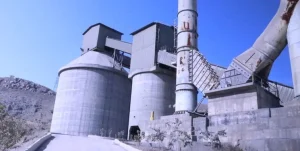
- Storage Silos: These large cylindrical structures are used for the temporary storage and homogenization of raw materials and clinker before they enter the final stages of production.
- Raw Mill and Cement Mill: This stage involves two main types of grinding systems:
- Raw Mill: Grinds the homogenized raw materials into a very fine powder.
- Cement Mill: Grinds cooled clinker together with additives such as gypsum, which is used to control cement setting time, into the final cement product. Large grinding mills, typically ball mills or vertical roller mills, are used in this stage. Advanced equipment ensures accurate particle-size distribution and uniformity of the final product.
- Cement Silos and Packing and Loading System: The finished cement is stored in dedicated cement silos. Depending on market requirements, the cement is then automatically packed into designated bags or loaded in bulk into cement tankers for transportation.
Technology and Benefits of Using Modern Equipment in Cement Plant Construction by Atiye Sazan Negin Faraz Knowledge-Based Company
- Use of energy-efficient equipment: Significant reductions in fuel and electricity consumption through the application of modern technologies in kilns, preheaters, coolers, and grinding systems.
- Optimized production-line design: Reduction of material and energy losses and minimization of environmental impacts through the use of advanced machinery and pollution-control systems.
- Implementation of advanced industrial automation systems: Use of modern PLCs and sensors for precise process control, enhanced operational safety, and reduced dependence on manual operator intervention.
For consultation and further information, please contact us.